Loading...
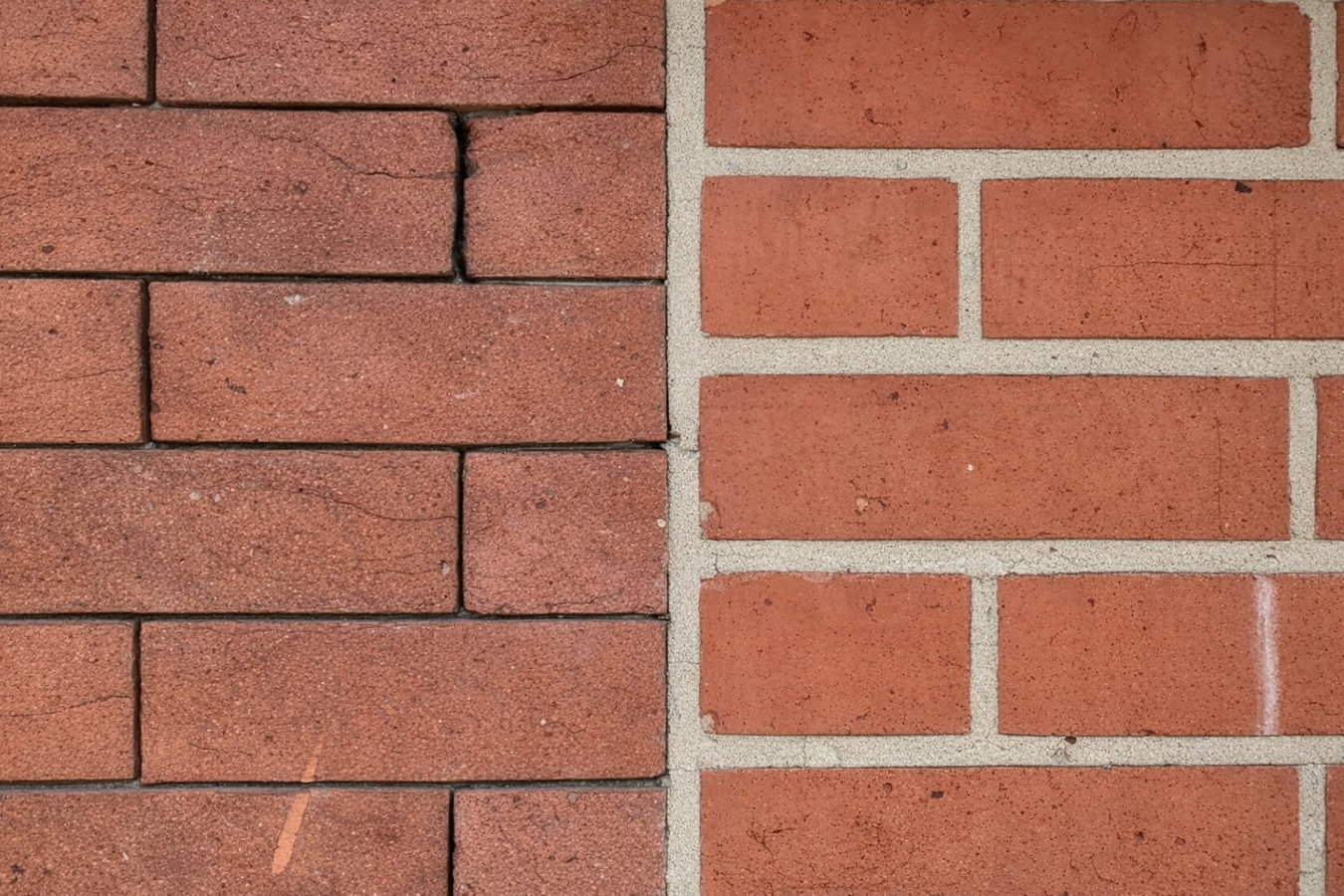
Failing mortar joints let water in during monsoon storms and weaken over time in Yuma's desert heat. We grind out the old material and repack every joint with fresh mortar matched to your home's age and brick type - done right before the rains arrive.
Brick pointing in Yuma is the process of removing crumbling or worn mortar from the joints between bricks and packing in fresh mortar by hand - most residential jobs take one to two days, depending on how much wall area is involved and how deeply the old mortar has failed.
In Yuma, mortar wears out faster than in cooler climates. The constant thermal stress - walls expanding in 110-degree summer heat and contracting on cooler nights - works the joints loose over years. When monsoon rains arrive in July and August, that standing water drives into any open joint quickly and accelerates the damage. The earlier you catch deteriorating joints, the less expensive the fix. If you also have broader structural concerns about your home's masonry - not just the mortar joints - our foundation repair service addresses deeper structural issues separately.
One detail that matters on older Yuma homes is mortar type. Homes built before the 1960s in Yuma's established neighborhoods were often constructed with softer brick designed for lime-based mortar. Using modern Portland cement mortar on those older bricks can actually cause the bricks to crack over time. We test the existing mortar before mixing anything new, so the repair is compatible with your home - not just what is easiest to apply.
Run your finger along the joints. If mortar crumbles away easily, feels sandy, or has gaps you can press into, it is no longer doing its job. This is the clearest sign that repointing is overdue - and in Yuma's heat, deterioration can happen faster than homeowners expect.
That white powdery residue is called efflorescence - it is salt being pushed to the surface by moisture moving through the wall. In Yuma, this often shows up after monsoon season when rain drives water into failing joints. It is a visible sign that water is getting in where it should not be.
If you notice fresh cracks in your mortar joints in September or October after the rains, that is a pattern worth taking seriously. Yuma's caliche soil can shift when it absorbs water during monsoon season, and that movement shows up in masonry joints first. Catching these cracks early prevents much larger repairs before the next season.
Stand back and look at your brick wall from an angle in good light. Healthy joints sit close to flush with the brick face. If the joints look deeply sunken or like the mortar has shrunk back significantly from the brick edges, that is erosion that has been building for a while - common on Yuma homes that have not had masonry maintenance in 20 or more years.
We handle brick pointing and repointing on residential walls, chimneys, entry features, and boundary structures throughout Yuma. The process starts by grinding or chiseling out the old mortar to a consistent depth of roughly three-quarters of an inch - enough to give the new mortar a solid bond without destabilizing the surrounding joints. Fresh mortar is packed in by hand in layers, tooled to match the original joint profile, and cleaned off the brick face before it dries. We match mortar color as closely as possible using test patches, and we take steps during the curing period to protect the fresh joints from Yuma's dry heat and wind. For homeowners who need comprehensive exterior masonry work beyond repointing, our masonry restoration service addresses surface cleaning, staining, and structural rebuilding in the same visit where needed.
Older homes in Yuma's established neighborhoods get extra attention on mortar selection. We test the existing material before mixing anything new - because using the wrong mortar type on soft, older brick can cause spalling and cracking that costs far more to fix than the original repointing would have. If your home was built before the 1960s, we factor that into our assessment from the start rather than discovering it partway through the job.
For homeowners with one or more exterior walls showing deteriorated joints that need grinding out and repacking before monsoon season or sale.
Suited for homeowners with a brick chimney where mortar joints have worn or cracked, especially common on Yuma homes built in the 1970s and 1980s.
Best for homeowners with isolated sections of failed joints rather than a full wall - a cost-effective fix when the damage is localized.
For pre-1960s Yuma homes built with softer brick, where lime-based mortar must be used to avoid damaging the original brick over time.
Yuma averages fewer than three inches of rain per year, but what little rain it gets arrives in short, intense bursts during monsoon season. Those sudden storms hit brick walls that have been baking in dry heat for months - and if the joints are compromised, that water moves in fast. Homeowners who put off repointing through the spring often find that a single August storm accelerates damage significantly. Getting joints sealed before monsoon season arrives - ideally in late winter or early spring - is the most practical thing you can do to protect your wall. Homeowners in San Luis and nearby communities to the south often see moisture intrusion after monsoon season on walls that look fine the rest of the year.
The low humidity that defines Yuma's climate creates a second challenge: fresh mortar can lose moisture too quickly during curing, which weakens the bond. A knowledgeable local mason accounts for this by misting new joints or scheduling work during the cooler part of the day. This is not standard practice everywhere - but in Yuma it is the difference between a repair that lasts 25 years and one that starts showing cracks in three. In Wellton and other desert communities east of Yuma, the same extreme heat and dryness apply - we bring the same hot-weather approach to every project in the region.
We ask how old the home is, what the damage looks like, and where it is on the house. This takes about five minutes and helps us know what to look for before we visit. We reply within 1 business day.
We walk the affected area, check how deep the joint damage goes, and look for signs of water intrusion or structural movement. On older Yuma homes we also check what type of mortar was originally used - this determines what goes back in. You receive a written estimate that breaks down the scope of work and timeline.
We recommend the cooler months - fall through early spring - for best results. If the project is urgent in warmer weather, we schedule work for early morning hours to avoid peak afternoon temperatures. You do not need to do much to prepare - just clear the area around the wall so the crew has room to work.
We grind out the old damaged mortar, pack fresh mortar in by hand in layers, tool each joint to the correct profile, and clean smears off the brick face. After the walkthrough, we advise you on the curing period - typically 24 to 48 hours before the wall gets wet, and up to a month for full hardness in Yuma's dry conditions.
Written estimate, no pressure. We schedule work around Yuma's climate so the mortar cures the way it is supposed to.
(928) 291-0632Using the wrong mortar type on an older Yuma home can cause more damage than the failing joints did. We test the existing mortar before mixing anything new, and we use lime-based mortar where the original construction requires it. That one step prevents a common and expensive mistake that shows up years after a cheaper contractor has moved on.
Fresh mortar in Yuma's dry summer air loses moisture too quickly, weakening the bond before it ever fully sets. We mist new joints and schedule work during cooler parts of the day so the mortar cures the way it is supposed to. Repointing done in 110-degree heat without these precautions often fails within a year or two - we do not cut that corner.
We book work in late winter and early spring so your walls are sealed and ready before monsoon season arrives. Yuma's summer storms can drive water into failing joints quickly, and a wall that is not protected heading into July is a wall that may need much more extensive repairs by October. Planning ahead is the simplest way to avoid that outcome.
Arizona requires contractors performing masonry work to hold a current state license through the Arizona Registrar of Contractors - verifiable for free on their website. Our license means we carry required insurance and are accountable to a state body if anything goes wrong. The Brick Industry Association publishes standards that we follow for joint depth, mortar tooling, and curing procedures.
Brick pointing is not a flashy project - but it is one of the most cost-effective things you can do to protect a masonry wall in Yuma's climate. A straightforward repoint done correctly extends the life of your wall by decades. Every estimate we provide is written, itemized, and explained before any work begins.
Structural repairs for foundations showing cracks, settling, or water intrusion - the deeper fix when mortar joint failure has allowed moisture to reach your home's base.
Learn MoreFull surface and structural restoration for brick, stone, or block that has deteriorated beyond routine repointing - bringing older Yuma masonry back to sound condition.
Learn MoreYuma's summer storms hit fast. Call or submit a request today and we will get your walls sealed before the rains arrive.